

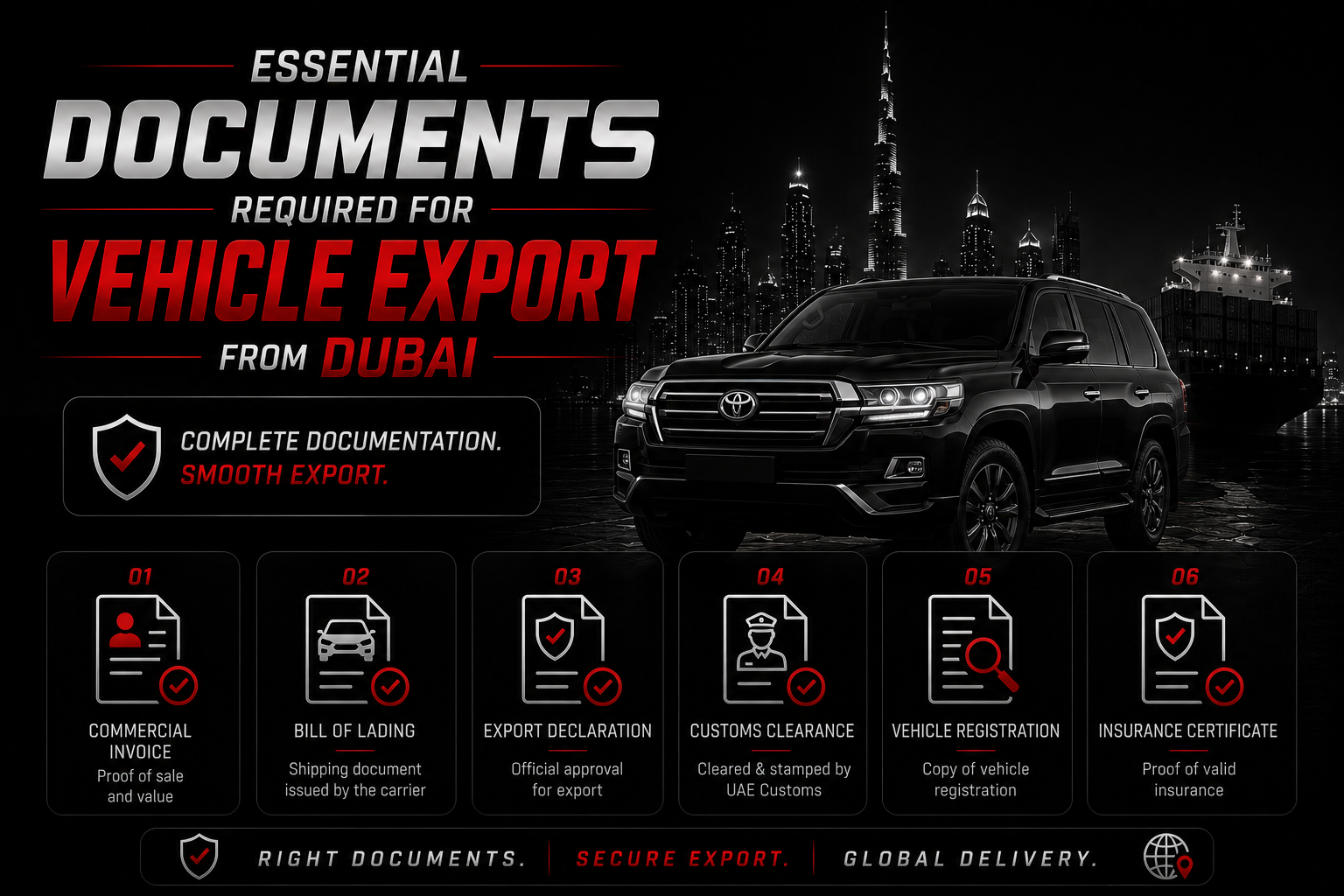
Dubai has become one of the world’s leading automotive export hubs, supplying vehicles to customers across Africa, Asia, and many international markets. Whether exporting a luxury SUV, pickup truck, commercial van, or passenger bus, proper documentation is essential to ensure smooth customs clearance and international shipping.
Understanding the required export documents helps buyers avoid delays, unexpected costs, and shipping complications.
One of the most important documents required for vehicle export is the Commercial Invoice. This document contains key information such as vehicle details, chassis number, engine number, buyer information, seller details, and the agreed purchase price. Customs authorities use this invoice to verify the shipment and calculate import duties or taxes.
Another essential document is the Export Certificate. This confirms that the vehicle has been legally cleared for export from the UAE. Without this document, the vehicle cannot leave the country through official export procedures.
The Bill of Lading is also extremely important. Issued by the shipping company, this document acts as proof that the vehicle has been loaded onto the vessel for international transport. Buyers usually need the Bill of Lading to claim the vehicle upon arrival at the destination port.
Customs Export Declaration documents are also required during the export process. These documents are processed through UAE customs authorities and help verify the legality of the shipment.
Some African countries may require additional documents depending on local import regulations. These may include inspection certificates, roadworthiness reports, emissions compliance documents, or destination-specific customs forms.
Buyers should also maintain copies of identification documents such as passports, company registration certificates, or tax identification numbers where required.
Insurance documentation is another important aspect of vehicle shipping. Depending on the shipping method and destination country, exporters or buyers may arrange marine insurance coverage to protect the vehicle during transit.
For financed vehicles or fleet purchases, banking and payment verification documents may also be necessary during customs processing.
One major advantage of working with experienced Dubai exporters is professional support with documentation and shipping procedures. Reliable exporters help buyers prepare the correct paperwork and ensure compliance with international export requirements.
Dubai’s advanced logistics infrastructure and efficient customs systems make the export process faster and more organized compared to many international markets. Ports such as Jebel Ali Port handle thousands of vehicle exports regularly, supporting smooth global shipping operations.
Before importing a vehicle, buyers should also research local regulations in their destination country, including import duties, taxes, age restrictions, and registration requirements.
Proper documentation plays a critical role in successful international vehicle shipping. Having the correct paperwork prepared in advance helps ensure faster customs clearance, secure transportation, and a smooth delivery process from Dubai to Africa and other global markets.